
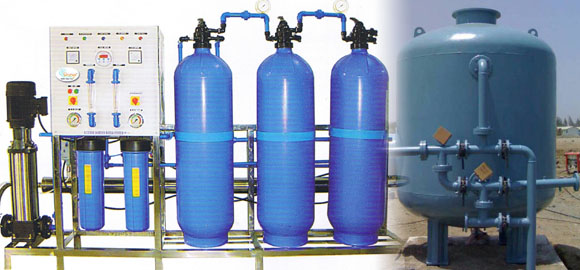
Softener Plant
Filtracon technology is a Softener plant manufacturer in Kalyan,Mumbai. The presence of hardness salts (calcium and magnesium ions) in the make up water softeners water supplies to boilers, cooling and process waters can have a serious impact on their performance. Loss of heat transfer in boilers and poor cooling in re-circulating cooling systems results in an increase in both energy and water consumption, and an increase in operating costs.
The reliable Filtracon Technology standard range effectively removes these hardness salts and provides a valuable return on your investment.
We are offering highly durable Water Softening Plant that is used for removing hard salts and providing suitable water. The water gets hard when it contains more of calcium and magnesium ions. Softening is the ion exchange process, which is done through resin, is preferred over others plant as it is one of the best possible method for removing from water. Here, undesirable ions are exchanged for ions that are more required. The process comprises of passing the unrefined water containing hardness through a bed of cation resin in sodium form. The hardness ions Ca & Mg are then up by resin and in exchange, the sodium ions are turned down from the resin. This is the service cycle, where the hard water is being softened in this plant.
Hard water can lead to the following water problems:
- Scale build-up in pipes, resulting in decreased flow rates
- Scale build-up on heating and cooling systems, leading to increased electricity costs and breakdowns.
- White film on glass surfaces and staining on water taps
- Increased laundry costs due to hard water reacting with soap and laundry detergents.
The Process :
The heart of a water softener is a mineral tank. It’s Filled with small polystyrene beads, also known as resin or zeolite. The beads carry a negative charge. Calcium and magnesium in water both carry positive charges. This means that these minerals will cling to the beads as the hard water passes through the mineral tank. Sodium ions also have positive charges, albeit not as strong as the charge on the calcium and magnesium.
When a very strong brine solution is flushed through a tank that has beads already saturated with calcium and magnesium, the sheer volume of the sodium ions is enough to drive the calcium and magnesium ions off the beads. Water softeners have a separate brine tank that uses common salt to create this brine solution. In normal operation, hard water moves into the mineral tank and the calcium and magnesium ions move to the beads, replacing sodium ions. The sodium ions go into the water. Once the beads are saturated with calcium and magnesium, the unit enters a 3-phase regenerating cycle. First, the backwash phase reverses water flow to flush dirt out of the tank. In the recharge phase, the concentrated sodium-rich salt solution is carried from the brine tank through the mineral tank. The sodium collects on the beads, replacing the calcium and magnesium, which go down the drain. Once this phase is over, the mineral tank is flushed of excess brine and the brine tank is refilled.
Industries Who use Softener Plant :
- Boiler Feed
- Cooling Tower Make-Up
- Air Conditioning Plant
- Textile Processing
- Beverage Production
- Hospitals, Hotels, Laundries etc.
Treated Water Quality :
